
Part of Kolkata’s Cultural Brand Identity – National Library of India
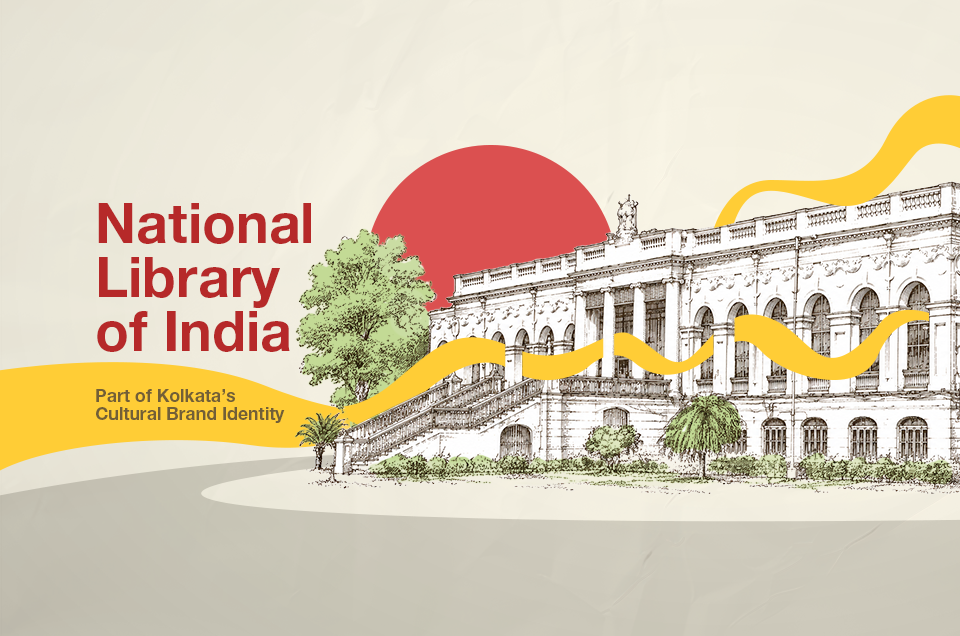
Situated in Alipore, Kolkata, the National Library of India is an imposing building set amidst rolling grounds full of old and new trees. But it is far more than simply an imposing building. Delve into its history and you discover that “the stately mansion with its varied façade evolved from out of the fancies of a number of distinguished owners whose names have made history” and evolved to a living archive of India’s intellectual, political, and cultural history. Today, the National Library of India remains one of Kolkata’s landmark institutions and the largest library in India, an imposing repository of books and journals.
It would not be out of place to say that knowledge lives in the National Library of India, in its enormous intellectual credibility. It possesses a venerable reputation much like iconic educational institutions or heritage universities built over generations through scholarship, preservation, and public trust over nearly two centuries. For countless researchers, historians, writers, civil service aspirants, linguists, academics and even knowledge-thirsty curious readers, the library symbolizes seriousness of study and depth of information. Which is why at Brand Chorcha, we are emboldened to include the National Library of India as a “brand” whose credibility is built upon years of identity, trust, and enduring value.
Furthermore, the National Library of India represents continuity of knowledge across the flux of eras. The library has survived colonial rule, independence, emerging technological shifts, and the digital revolution while continuing to remain relevant. That gives it a timeless institutional identity. In many ways, the National Library of India functions like a heritage brand — one associated with authenticity, authority, and legacy.
Kolkata itself has historically been associated with intellectual culture, publishing, debate, literature, and education. The National Library strengthens this image. Just as some cities become identified with finance, cinema, or technology, Kolkata’s association with books and scholarship is reinforced by the presence of this monumental institution. In that sense, the library becomes part of the city’s cultural brand identity as well.
The institution is not merely India’s largest library; it is one of the country’s most enduring brands of knowledge Today, the National Library of India remains relevant owing to some pretty compelling reasons –
- Its archival responsibility gives it national authority,
- Its multilingual collections represent India’s intellectual diversity,
- and its heritage setting creates an emotional and cultural connection beyond academics alone.
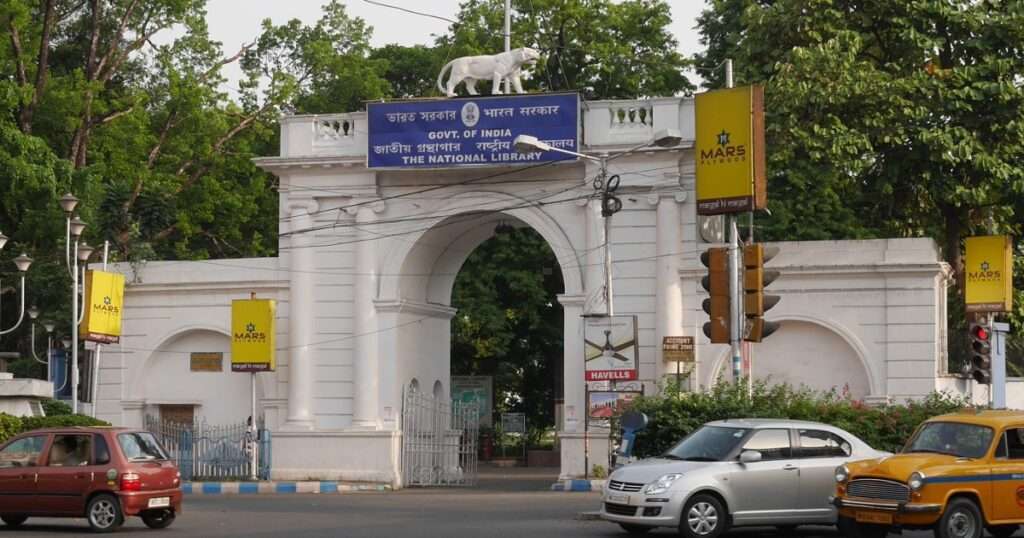
From Calcutta Public Library to a National Institution – Looking Back at History
The roots of the National Library go back to almost two hundred years. The journey started in 1836 with the establishment of the Calcutta Public Library. Founded on the principle of public access to knowledge, it was among the earliest institutions of its kind in India, and records indicate that readers irrespective of race, class, or nationality accessed its resources even in pre-Independence times.
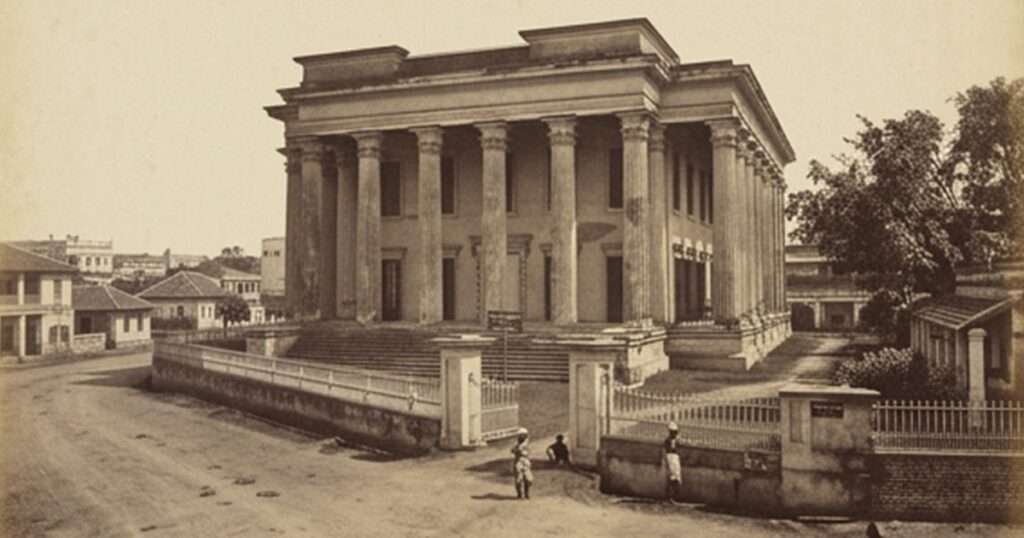
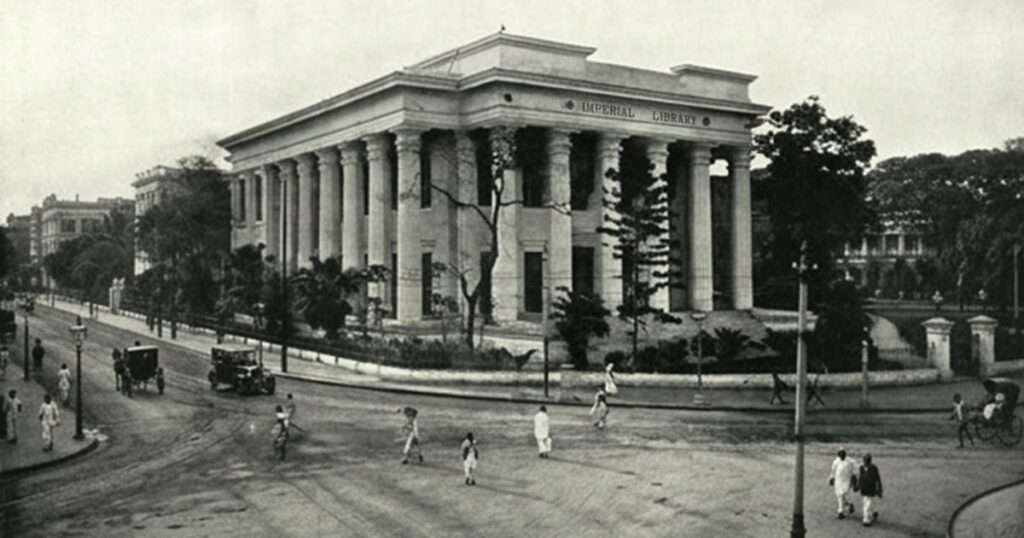
During the colonial era, another important institution existed alongside it called the Imperial Library that was created by combining several secretariat libraries used by the British administration. However, in 1903, under the initiative of Lord Curzon, the Calcutta Public Library and the Imperial Library were merged. The new institution was opened to the public at Metcalfe Hall (this heritage building still stands in modern Kolkata’s central business district of BBD Bag) and became one of the most important libraries in British India. This “common” library was known as the Imperial Library.
After Indian Independence, the Imperial Library was renamed the National Library through the Imperial Library (Change of Name) Act of 1948. The collections were shifted from Metcalfe Hall (now known as BBD Bag) to the historic Belvedere Estate in Alipore.
The library was formally opened to the public on February 1, 1953, by Abul Kalam Azad, the first education minister in independent India in Jawaharlal Nehru’s cabinet, marking a significant milestone in India’s post-independence cultural history.

Important Milestones of National Library of India
Several landmark developments have shaped the evolution of National Library of India and it makes sense to include them in this blog –
- 1836 – Establishment of Calcutta Public Library
Marking the beginning of organized public library culture in colonial India.
- 1903 – Formation of the Imperial Library
The merger of the Calcutta Public Library with government secretariat collections (called Imperial Library) created one of Asia’s most important colonial-era libraries, a unified institution known as the Imperial Library.
- 1948 – Renaming as the National Library of India
Independent India transformed the institution into a national repository of knowledge through the Imperial Library (Change of Name) Act, 1948 enacted by the Government of India.
- 1953 – Public Opening of National Library of India at Belvedere Estate
The National Library of India began operating from its present location in Alipore.
- 1954 – Delivery of Books Act
An important milestone was the Delivery of Books and Newspapers (Public Libraries) Act, 1954. This law made it mandatory for publishers in India to deposit copies of their publications with the National Library of India, consequently turning the institution into India’s permanent archival repository of printed material.
- Ongoing Preservation and Digitization Efforts
Keeping up with modern times and technological demands as well as readers’ preferences, the library has focused increasingly on conservation, restoration, and digitization of manuscripts and rare works to ensure long-term accessibility for researchers. Today, it has a collection of Open Educational Resources with a sub-category of Children’s Educational Resources, as well as a wide variety of national and international online journals.
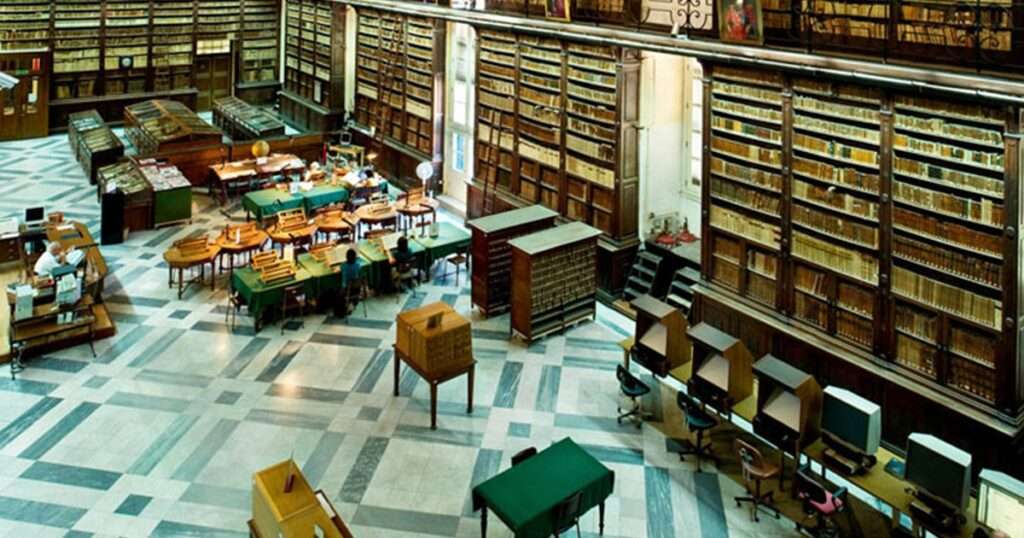
National Library of India – Housing a Collection of Humungous Scale and Richness
The National Library’s collection is truly staggering in scale. It is India’s largest library by collection and archival responsibility. As of date, it houses millions of books, newspapers, journals, manuscripts, maps, and government publications in numerous Indian and foreign languages.
What makes the collection particularly valuable is its multilingual nature. There are specific, separate divisions for major Indian languages including Bengali, Hindi, Urdu, Odia, Dogri, Tamil, Marathi, Punjabi, Sanskrit – both Pali and Prakrit, Assamese, and more. Extensive collections of literature, books, and periodicals are maintained in the regional languages.
Researchers often regard the newspaper archives as among the library’s greatest treasures. Historians studying colonial India, Bengal Renaissance literature, nationalist politics, or early Indian journalism frequently rely on the archival material of the National Library of India because they contain rare periodicals and newspapers.
The institution also preserves manuscripts, rare maps, personal collections donated by scholars, and important historical documents that are difficult to find elsewhere in India.
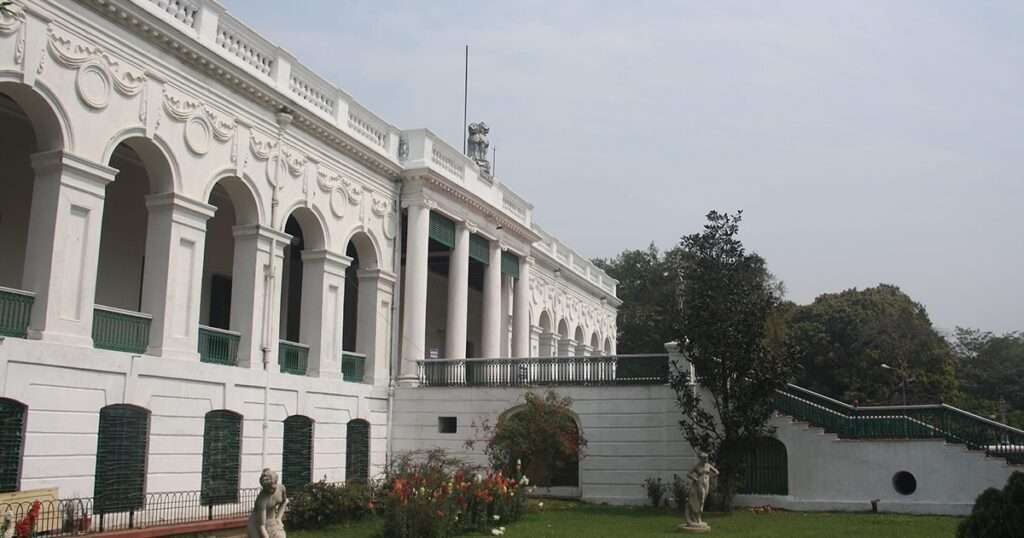
Current Relevance in the World of Digitalization
We live in an age dominated by online search engines, e-books, and now AI. You may wonder if there is actually any use of a physical library in our times when answers can be had in a snap with AI. Well, the answer lies in the National Library of India’s enduring role as an archival and research institution.
The amount of archival matter here is massive and not everything has been digitized. Rare manuscripts, historical newspapers, government records, and old publications often exist only in physical form. Scholars conducting serious historical or literary research continue to depend heavily on such archives. Some would even prefer to see the original form for themselves.
Secondly, the library remains an important public intellectual space. Students preparing for competitive examinations, university researchers, writers, and independent scholars still use its reading rooms extensively. Discussions and workshops on literature, culture, and preservation continue to take place in the institution.
Thirdly, the National Library of India represents continuity. In a rapidly changing urban landscape, it serves as one of the few spaces where Kolkata’s long-standing culture of reading and scholarship remains visible.
Why the National Library of India Will Continue to Stand Apart
India has several renowned libraries – the Connemara Public Library, Asiatic Society Library, and the Khuda Bakhsh Oriental Public Library. Yet Kolkata’s National Library occupies a category of its own. As mentioned earlier, one important reason is its scale. Another is its historical depth. Its impressive historical setting also adds to its charisma. The centuries-old heritage estate comes with a rich political and cultural memory. Who can miss the legendary stories associated with Belvedere House till today – from deep colonial intrigue to chilling tales of bloody duels on its grounds, discovery of hidden chambers and doors opening and shutting on their own.
But, above all else, the National Library of India will continue to stand out because it reflects the city itself – intellectual, knowledge- hungry, historic, multi-layered. So, for Kolkata, the National Library of India is not merely a building filled with books. It is a monument to its reading culture and a guardian of the country’s documentary heritage. From its beginnings as the Calcutta Public Library to its evolution into India’s foremost archival institution, it has mirrored the nation’s own intellectual journey.

As a brand, the National Library of India remains one of the city’s proudest cultural landmarks, a reminder that preserving knowledge is as important as creating it. When you step into this hallowed institution, it offers you something that is fast vanishing in today’s world – a sea of silence and an opportunity to reflect as you absorb the enduring power of books.