
From Burrabazar to Across the World, Kolkata’s Masala Brands Stand Firm

Nupur is having a busy morning, rustling up her trademark Indian spread for special guests in her Lansing home using her family’s hand-me-down recipe. Each time she cooks the meal, she is confident it will turn out just right because she can turn to her spice box with its authentic masalas to add the magic touch. That’s the power of spices from her hometown, Kolkata.
But, let’s step back and do a quick rewind. There was a time when the aroma of spices hung like an exotic curtain over lanes and shops in a certain locality in Kolkata (erstwhile Calcutta). It floated through the crowded alleyways of Rajakatra and Posta, major hubs of wholesale for the sale of spices. Here, business was brisk. Massive sacks of red chillies, cumin, turmeric, coriander, poppy seeds, and other spices changed hands every day.
For several generations, Calcutta was not merely a city that consumed spices but an important centre for their trading, processing and distribution across the nation. And, as time went by and the city’s households changed, so did the way spices reached the kitchen. Whole spices that were once bought loose and ground at home gradually gave way to neatly packaged powders and blended masalas.
What’s more, with the advent of logistics and technology, Kolkata’s spices have moved across continents, are available in major dry goods and food supplies stores and in kitchens everywhere. Nupur’s kitchen in Lansing, for example.
Did you know some of the current leading brands that made that transition began right here in Kolkata? We bring you some interesting details in this Brand Chorcha blog.
Cookme: A Legacy of Spices Since 1846
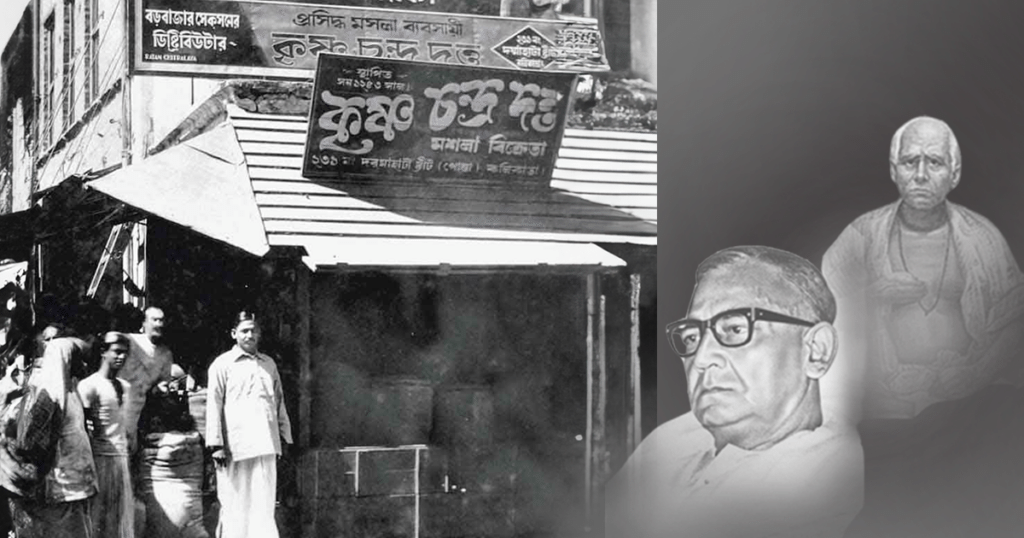
Few names are as closely associated with Kolkata’s spice history as Cookme whose story is one of rich legacy and details. It goes back to 1846, when Krishna Chandra Dutta, originally from Saptagram in Hooghly, settled in Sutanuti and established a spice shop in Dormahata in Posta. Back then, Dutta’s business dealt in whole spices and his modest shop sold chillies, turmeric and cumin — staples of everyday Bengali cooking.
But the truly transformative chapter came much later. Sometime after Independence in the 1950s, as modes of cooking transformed with tinier kitchens, womenfolk increasing joining the workforce and consequent space and time constraints, the Dutta family began moving from whole spices towards powdered spices. It certainly made the daily business of cooking considerably easier.
The brand name Cookme was registered in the early 1960s, and the company subsequently expanded into curry powders, pastes and ready-to-use mixes. This was more than just a business innovation. It reflected a profound change in the Indian household. By this time, it was certainly a new India with more nuclear families, women away on work and social commitments for lengthier hours, new-age men taking to cooking, and the profusion of restaurants and eateries of all kinds. Cookme’s powdered and blended products brought convenience without entirely abandoning the flavours of traditional cooking.
Today, Cookme remains a Kolkata-associated brand with a history stretching back almost 180 years.
Sunrise: Over A Hundred Years of Spices
We present another remarkable Kolkata story of spices from Sunrise. According to the brand’s own history, a small spice-trading business was established in Kolkata in 1902. Over more than a century, it scaled up from trading in spices to producing whole spices, powdered spices and blended masalas for the consumer market in India and abroad.
The Sunrise range eventually grew well beyond basic turmeric, chilli, coriander and cumin. Blended products brought the convenience of measured combinations of spices into everyday cooking, reflecting the growing popularity of packaged masalas among Indian consumers.
More recently, the brand’s journey took a major turn in 2020, when Sunrise Foods became part of ITC Limited. Its acquisition brought a distinctly Kolkata-born spice business into one of India’s largest FMCG companies and gave it a much wider national platform.
When one thinks about it, there is something particularly satisfying about this journey – here is a small spice-trading enterprise born in Calcutta at the beginning of the twentieth century that has eventually become a part of a huge, modern national food business while retaining its core identity.
JK Masale: The Quintessential Burrabazar Entrepreneurial Story
When we think of Cookme, it represents old Calcutta’s traditional spice trade. When we think of JK Masale, it represents the robust entrepreneurial energy of post-Independence Burrabazar.
The business traces its origins to Dhannalal Jain, who, according to our research arrived in Calcutta in the early 1950s. He initially worked as a humble daily job, loading and unloading goods in Burrabazar. But, Dhannalal Jain worked with dreams in his head and optimism in his heart. Gradually, he made an entry into the spice trade.
Jain soon became an expert of spices and developed particular skill in cumin, or jeera, and eventually earned the nickname “Jeera King.” The business subsequently developed into JK Masale, expanding from spice trading into packaged consumer products.
It is a classic Burrabazar story – that of an immigrant entrepreneur who enters a demanding trading environment, learns the business from the ground up, and eventually builds a consumer brand that goes global.
Perhaps, this is one reason Kolkata’s old markets remain so important to the city’s commercial and business history. Behind many familiar brands lie stories of individuals who began with very little but quickly grasped the value of knowing their product and value proposition, and their customers.
Ganesh: An Old Kolkata Name Finds a New Spice Shelf
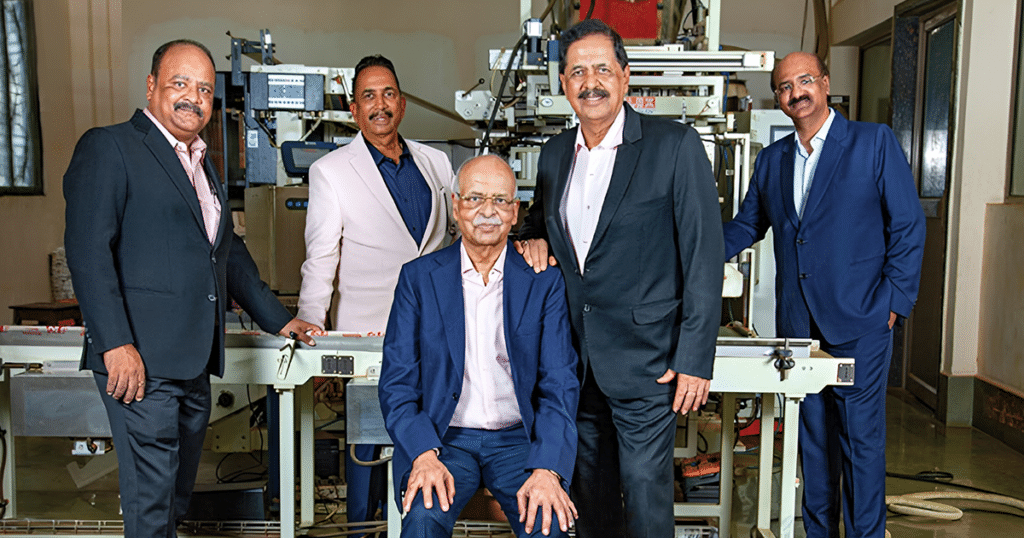
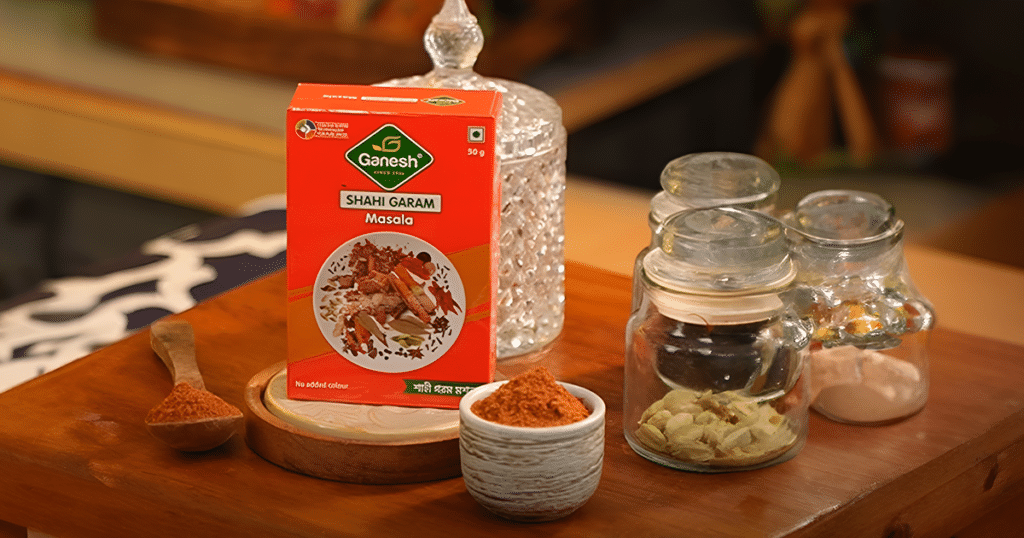
Ganesh is certainly not a new Kolkata brand. Its origins go back to 1936. The business began with a retail outlet in Burrabazar selling flour under the Ganesh name. For decades, Ganesh became associated primarily with flour and other staple food products. And its identity was built around the everyday Indian kitchen rather than spices alone.
Very recently, in 2023, the business reinvented itself with a new logo and a range of new product offerings. Ganesh Consumer Products entered the spices category, launching whole and powdered spices including turmeric, chilli, cumin and coriander. In 2024, the company expanded further into blended spices, including Garam Masala and Biryani Masala.
Ganesh, that began in Burrabazar nearly nine decades ago serving households with flour, is now putting masalas on those same kitchen shelves for consumers who know full well what the brand stands for.
Masalas That Became Brands
The through line of these businesses is simple to understand – they sell more than spices; they are an integral part of millions of Indian kitchens and homemakers who implicitly trust the brand names.
Also, seen from another angle, they represent different stages in the evolution of the Indian kitchen. From whole spices to ground and packaged ones, home cooks, professional chefs, radhunis, and bawarchis have taken a big leap of functioning style.
Cookme emerged from the traditional spice trade and helped popularise powdered spices. Sunrise carried the old trading tradition into the modern packaged-food era.
JK Masale represents the entrepreneurial culture of Burrabazar and its ability to turn trading expertise into consumer brands. And Ganesh demonstrates that Kolkata’s established food businesses are still evolving, adding new categories to serve changing tastes and lifestyles.
There is also something distinctly Kolkata about the geography of these stories. The alleyways of Rajakatra and Posta were once places where spices arrived in sacks, where merchants negotiated prices, and where shopkeepers formed relationships that would last generations – with fathers passing on business contacts to their sons who in turn passed them on to their sons over time. Today, a few of them still retain their old premises while most have moved to newer, bustling business hubs of the city. But, all of them are business that eventually moved from selling ingredients to creating brands.
The packet on today’s kitchen shelf may look very different from a sack of cumin in an old Calcutta warehouse. But – know your spices, understand your customer, and ensure authenticity goes into the food. This core value has endured. Perhaps that is why these brands have endured.
Because behind every delicious gulp of Chingri Malaikari or serving of Shukto, every fragrant pot of Biryani or rich, earthy Aloo Posto, lies a small piece of Kolkata’s commercial and culinary history with legendary masala brands.