
CINEMA, CULTURE, AND COMMERCE REMAIN INTERLINKED IN BENGALI FILM INDUSTRY

– Leading Names Dhrubo Banerjee, Anirban Bhattacharya and Anindya Chatterjee Discuss the Whys and Wherefores –
Brand Chorcha presented its first edition on 5th June 2026 at Taj Bengal, Kolkata, a platform where eminent speakers across sectors shared their insights on brands and branding. With several riveting sections across the day, Brand Chorcha presented thoughts and ideas from a cross-section of experts on how business brands work in Bengal.
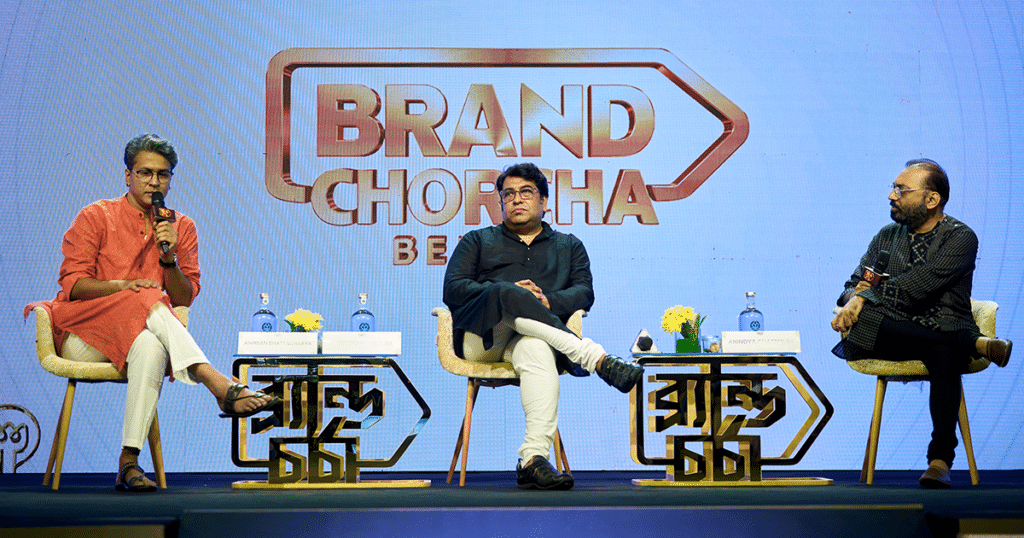
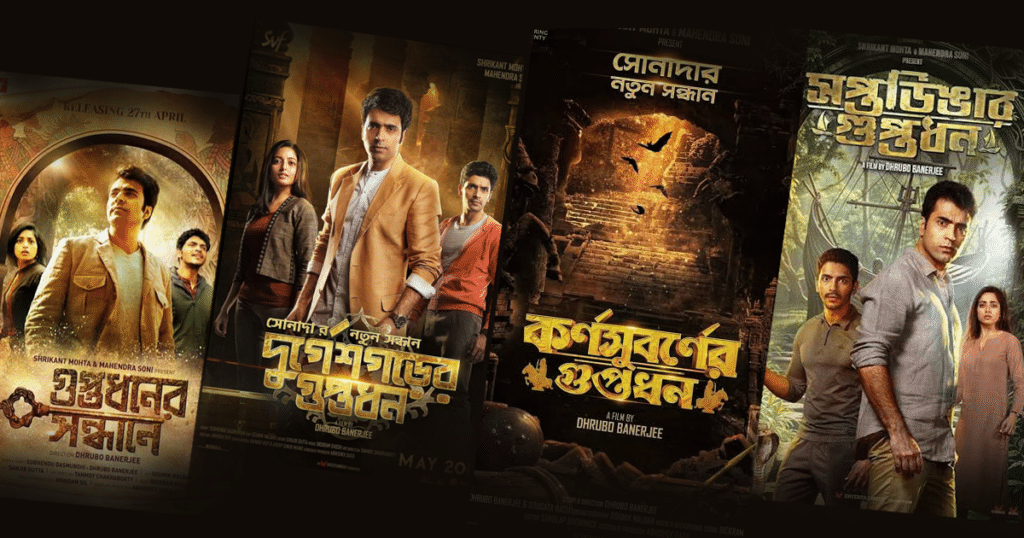
‘Rethinking the Narrative of Brands around Bengali Film Industry: Cinema- Culture- Commerce’ brought together three individuals whose lives are deeply intertwined with the current Bengali film industry. The audience listened to Anindya Chatterjee, music director-composer-singer-lyricist in contemporary Bengali cinema, question Dhrubo Banerjee, Bengali film director of the acclaimed ‘Sona da’ adventure franchise, and Anirban Bhattacharya who has essayed a number of powerful roles across genres in Bangla films.
Here are snippets of their conversation with riveting questions and candid answers.
The Dialogue:
Anindya Chatterjee: Is there a palpable concern about the current state of Bangla cinema?
Dhrubo Banerjee: I have my reservations about the so-called “concern” about Bangla cinema. The process of film making is following a method of commerce and business. If audiences watch films in theatres, it sends a positive indication to producers. More films are created as producers are willing to invest. It is up to the film fraternity to create films that audiences are willing to pay and watch.
Anirban Bhattacharya: Audiences of Bangla films across the world are concerned and even on my overseas this is a question that comes up in almost every gathering – how are Bangla films doing? I consider this a good sign because it indicates that we are concerned and concern springs from interest. It shows an abiding enthusiasm.
Anindya Chatterjee: What is the level of support for Bangla cinema? How does one create a brand from a Bangla film?
Dhrubo Banerjee: I always keep in mind the fact that the producer is an individual for whom film production is a business and he is looking for a return on his investment for each film. Accordingly, I try and create films that appeal to generations of audience in theatres and ensure the film is a box office success. A brand is a born when a product is created through a diligent process of production and this applies to a film as well.
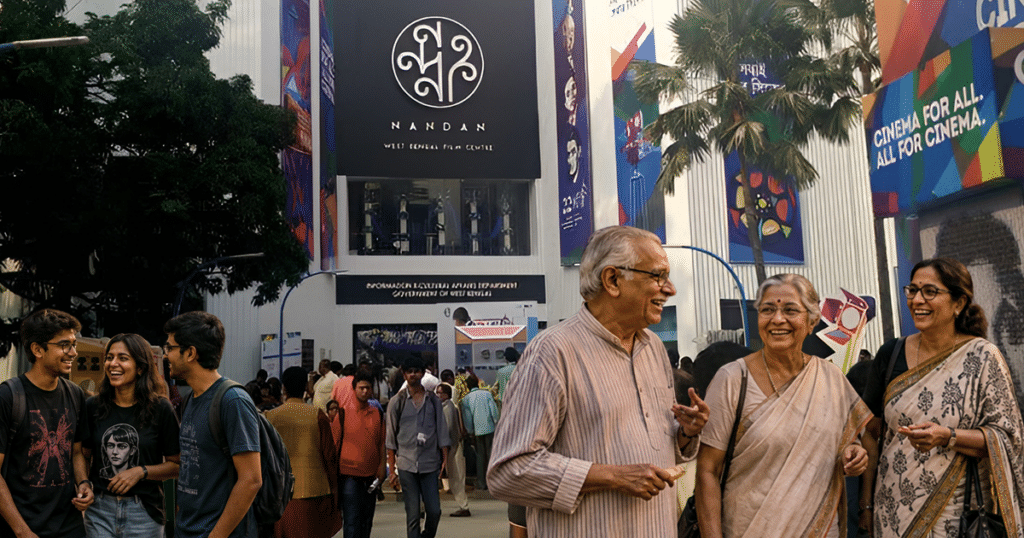
Anindya Chatterjee: How do we attract younger generations who seem disconnected altogether from the culture of watching films in theatres?
Dhrubo Banerjee: As this cannot be forced on young people, we need to develop an organic way of liking and appreciating films. Encourage youth participation at all levels. Don’t brush off a young filmmaker vis-à-vis a master only because his experience is less in terms of years. He/she may have spent considerable years learning the nuances of filmmaking before venturing out on their own. Encourage younger family members to watch and discuss films. If newer audience does not grow, we will soon be a dying breed.
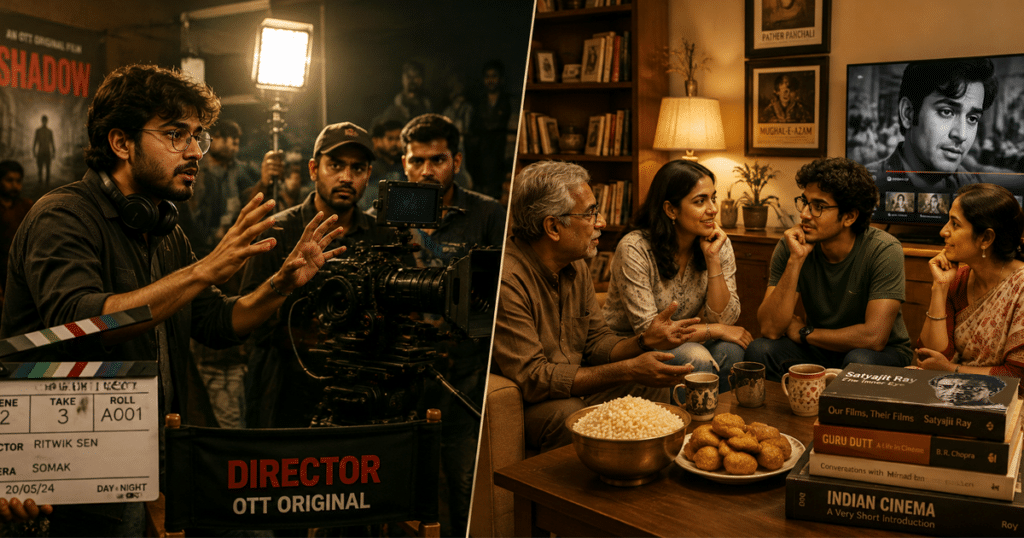
Anindya Chatterjee: Does one treat the audience as a consumer and research as much as possible about them before creating a film, a la ‘brand marketing’?
Anirban Bhattacharya: Personally, I do not adhere to this formula. My prime focus is on the process of making the film – Is it giving me joy? This is a recurrent question I keep asking myself through the process at several stages. I believe if I creates something out of joy, it is likely to appeal to the audience. At the same time, I cannot detach myself entirely from the audience. I would say I keep a balance between the two.
Anindya Chatterjee: Does a successful director worry about losing his Midas Touch?
Dhrubo Banerjee: I left a secure job to take up filmmaking and took 20 years to make my first film. Along the way, I faced my share of rejections and refusals before my first film could take off. However, today I am not in the least worried about losing anything. (Note – Dhrubo Banerjee has directed seven films till date and is considered one of the most successful and bankable directors in contemporary Bangla cinema) Filmmaking gives me joy, I have stories to tell, and I am happy to live as per his own pace. There is no hurry or anxiety.
Anindya Chatterjee: Are there many boxes to fill while creating a film for mainstream cinema?
Anirban Bhattacharya: The process of making a film should be remain one of collaboration as against conflict. Trying to fill in all the boxes by force while making each film is likely to derail the creative process of filmmaking.
The Take-away:
Summing up, the three unanimously felt the Bengali film industry does not enjoy the prestige and glamour of yesteryears and Bengali entertainment is up against several odds at present but it does not mean that all hope is lost. Right now, the sample size of the audience remains so small, that it is mostly overlooked and not considered worthwhile enough for in-depth analysis and research. Thus, we automatically eliminate getting enough statistics on what works or might work for the Bengali audience. Over the decades, the sector has also faced its share of unsupportive and hostile elements and gone through many non-progressive phases. Interestingly, though Bangla language and cuisine have made rapid strides over the past years, Bangla films have lost steam and slowed down terribly.
There is an imminent need to bring back the old sense of belonging and pride of Bangla films. Optimists, die-hard fans as well as the majority in the industry remain hopeful that cumulative effort will ring in the much-awaited time for revival. Better days for cinema-culture-commerce are hopefully just around, the panel felt.