
Warp and Weft – Textile and Handloom Brands of Kolkata
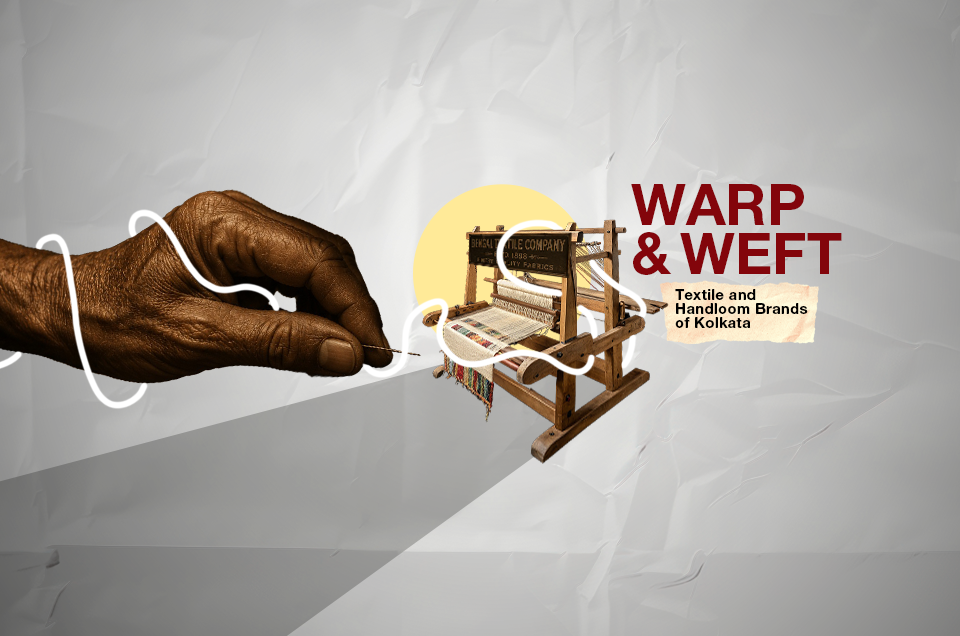
Kolkata is a city that wears its culture, quite literally, on its sleeve. Think of the elegance of a pale pastel Phulia to the intricate storytelling of a Baluchari. If you are in Kolkata, take a look around on the streets and despite the onslaught of western and fusion wear styles, traditional weaves will still catch your eye. Here, textiles are not just garments; they are living heritage, worn and flaunted with pride and affection.
At the heart of this legacy lies a network of “homegrown” brands – a combination of state-run institutions and private enterprises – that have worked over decades to preserve, promote, and reinvent Bengal’s handloom traditions.
Together, they form a vibrant ecosystem that makes Kolkata one of India’s most significant traditional textile hubs and a shopping destination for those looking for Bengal’s delightful weaves.
How Kolkata’s Homegrown Brands Ensure Art is Woven into Tradition
Bengal’s craftsmanship that includes its intricate weaving traditions is deeply rooted in its history. Did you know that Bengal’s weaving industry is centuries old with records dating back to at least the 4th century BC! There is evidence of Bengal’s famed muslin weave even in ancient Greek records.
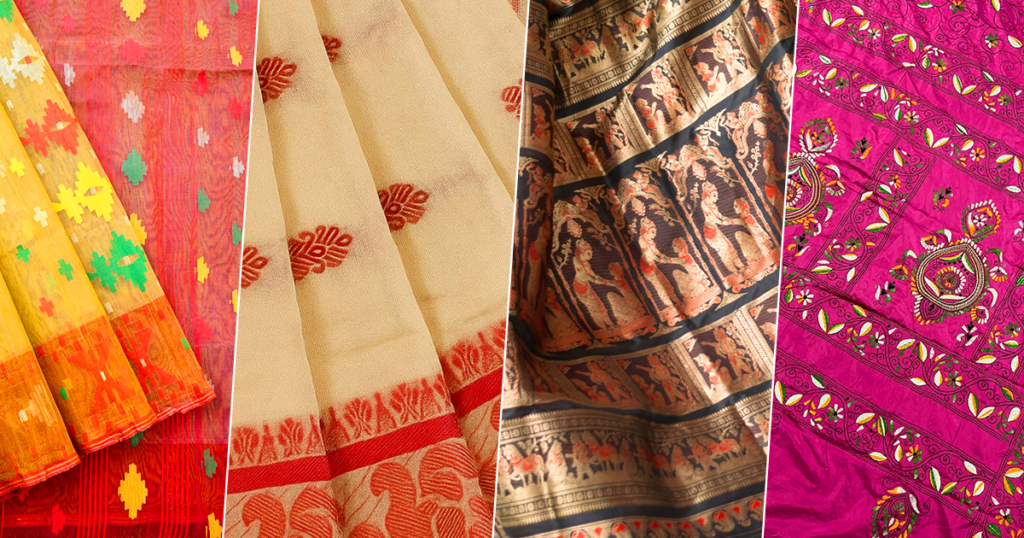
Jamdani, Tant, Bishnupuri, Baluchari, Kantha, Dhaniakhali, Phulia, and Tangail – these forms of weaving drapes evolved over time and continue to be an intrinsic part of Bengal’s social and cultural landscape. Known for their impressive range of motifs, colour and fabric, intricate detailing, durability, and fairly simple maintenance, these textiles have emerged not merely as fashion statements but expressions of identity.
Alongside these celebrated weaves is the humble gamcha—a lightweight but sturdy handwoven cotton cloth traditionally used as a towel or everyday utility fabric across Bengal. Once considered purely functional, the gamcha has, in recent years, undergone a remarkable transformation. Designers and homegrown brands have reimagined its distinctive checks and bold colours into sarees, stoles, dresses, and even contemporary fusion wear.
This reinvention of the gamcha is symbolic of Kolkata’s broader textile narrative, one where tradition is not frozen in time but constantly evolving. It reflects a shift towards sustainability and cultural pride, elevating an everyday fabric into a statement of style and identity.
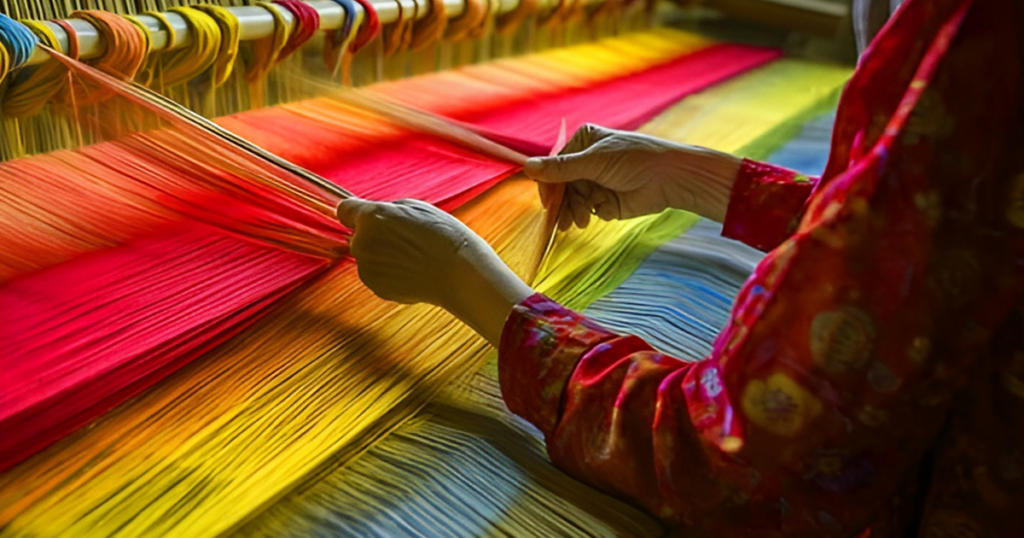
Unlike mass-produced garments, handloom textiles are labour-intensive and often created on traditional looms, ensuring that each piece is unique. This blend of artistry and authenticity lies at the heart of Kolkata’s enduring love affair with handlooms.
Tantuja: The State’s Cultural Ambassador
One of the most prominent names in this space is Tantuja. Established in 1954, Tantuja was envisioned as a platform to support local weavers while preserving Bengal’s textile traditions.
Tantuja’s strength lies in its diversity by bringing together everything from everyday Tant sarees to exquisite Jamdani and gorgeous Baluchari silks. More importantly, it works as an institution that provides weavers with organisational backing and a stable national marketplace, ensuring that traditional crafts remain economically viable.
Manjusha: Scaling Handloom Retail with Multiple Showrooms
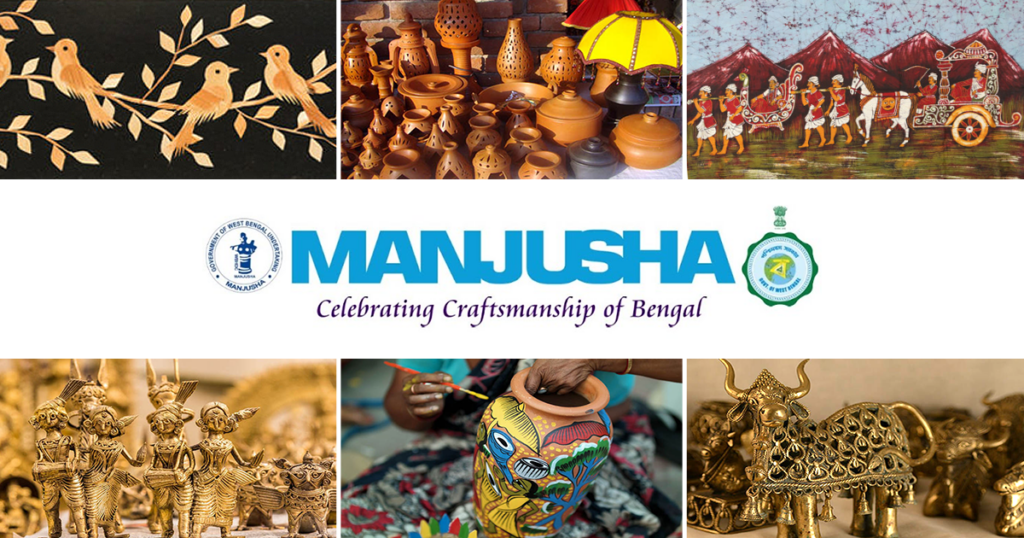
A key contemporary player in this landscape is Manjusha, the retail arm of the West Bengal State Handloom Development Corporation. With 20 showrooms across the state and one in Delhi, Manjusha has significantly expanded access to Bengal’s handloom products.
What distinguishes Manjusha is its scale and accessibility. By bringing handloom textiles into well-distributed retail spaces, it has made traditional sarees such as Tant, Jamdani, and silk, more easily available to fans of Bengal drapes in different locations. It plays a crucial role in bridging the gap between rural weaving clusters and urban consumers, ensuring that heritage textiles remain part of everyday life rather than niche luxury items.
Biswa Bangla: Branding Bengal for the World
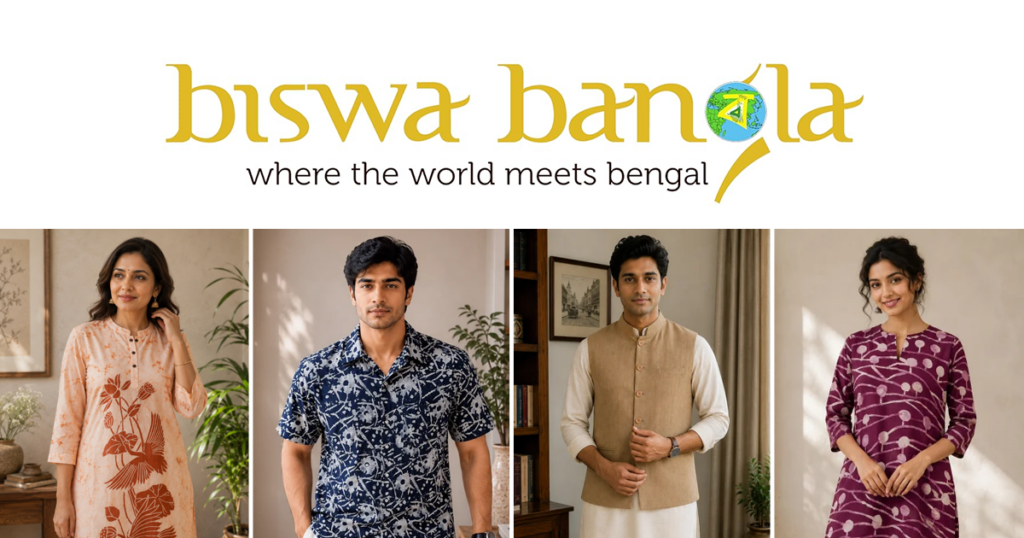
In recent years, Biswa Bangla has emerged as a powerful platform for showcasing Bengal’s textile heritage on a global stage. Steering away from strictly traditional retail formats, Biswa Bangla combines craft with contemporary branding. Its outlets present handloom sarees in curated, design-forward settings that appeal to modern consumers, including younger buyers and international visitors looking for aesthetic costume souvenirs.
Working closely with artisan clusters and investing in design innovation, the brand has helped reposition Bengal’s textiles as both heritage products and lifestyle statements. It also plays a key role in promoting these crafts beyond Kolkata with well-designed outlets and stalls at airports, exhibitions, and global showcases.
Artisan-Focused Brands and Boutiques
Alongside larger institutions, a growing number of boutique brands and artisan-led initiatives are redefining the space. These ventures often work directly with weavers, ensuring fair wages and sustainable practices. They highlight techniques like Kantha embroidery and Jamdani weaving, often experimenting with contemporary aesthetics and designs while staying rooted in tradition. This movement reflects a broader shift towards conscious consumption and appreciation for handcrafted textiles.
The Contemporary Shift: Where Tradition Meets Modernity
Today, Kolkata’s handloom and textile ecosystem is a dynamic blend of old and new. State-run brands like Tantuja and Manjusha coexist with modern platforms like Biswa Bangla and a growing number of boutique initiatives. While each plays a distinct role, their broader mission overlaps – that is, to promote the textile and handloom legacy and heritage of Bengal. Together, they ensure that this invaluable landscape is not just preserved but continually redesigned and reinterpreted for newer wearers and users.
These homegrown brands go beyond commerce by ensuring cultural preservation as they safeguard centuries-old weaving traditions. They create tangible economic Impact by supporting thousands of artisans across Bengal. Being eco-friendly and ethically produced, handloom textiles get high marks for sustainability. Lastly, they reinforce the identity of the artisan and craftsperson as they allow weavers to connect with Bengal’s cultural and traditional roots.
Custodians of Legacy: Kolkata’s Textile and Handloom Brands
One may rightly state Kolkata’s textile and handloom brands are custodians of a legacy that continues to evolve. From the institutional strength of Tantuja and Manjusha to the curated sophistication of Biswa Bangla and the innovation of artisan-led initiatives, each contributes to a rich and enduring narrative.
In an age dominated by fast fashion, these homegrown brands stand as reminders that true style lies in authenticity, craftsmanship, and cultural continuity. Every saree woven in Bengal carries a story. Through these brands, Kolkata ensures that these stories are not just preserved, but celebrated.
And perhaps nothing captures this spirit of evolution better than the journey of the humble gamcha that has traversed the journey from an everyday utilitarian cloth to a contemporary fashion statement. It is a reminder that in Kolkata tradition is never static. Every day, it is constantly being reinterpreted, reimagined, and worn anew.